
The gap between what the United States administration is demanding from Iran and what the Iranian regime seeks from this conflict continues to widen.
At present, the situation remains locked in a stalemate, with both sides firmly holding to their positions. However, developments in recent weeks have pushed the possibility of any meaningful resolution even further away, likely extending the confrontation well into 2027 and potentially beyond.
Since my previous article on why this war would not end anytime soon, several major incidents, political developments, and reports have emerged. Rather than moving the region toward de-escalation, these events have reinforced the broader argument that the conflict is entering a prolonged phase rather than approaching a quick settlement.
To understand why, it is important to examine Iran’s latest conditions for returning to negotiations.
Lebanon and the Limits of Negotiation
The first Iranian demand is an end to the current war across all fronts, including Lebanon. In reality, this demand has already effectively failed.
Israel’s leadership, particularly Benjamin Netanyahu, appears fully committed to continuing operations against Hizbollah in southern Lebanon. For Netanyahu, whose political future has faced pressure for years due to corruption investigations and internal political instability, the current conflict represents an opportunity to pursue what many within Israel view as a long-term strategic objective: significantly weakening or permanently removing the threat posed by Hizbollah along Israel’s northern border.
What is unfolding in Lebanon increasingly resembles earlier developments in Gaza. Villages have been heavily damaged or destroyed, civilians have been repeatedly displaced, and statements from Israeli officials and media outlets strongly suggest that operations will continue until Israel believes the threat has been substantially neutralised.
From that perspective, the Lebanese front is unlikely to end in the near future, effectively removing this condition from any realistic negotiation framework.
The Nuclear and Missile Deadlock
Iran’s second major demand involves guarantees that no future attacks will be launched against the country.
In theory, such guarantees could form part of a broader settlement. In practice, however, they are directly tied to what Washington is demanding from Tehran in return.
The core American demands remain largely unchanged:
* limits on Iran’s uranium enrichment and nuclear program
* restrictions on ballistic missile development
* limitations on drone programs
* Iranian-backed groups across the region, particularly in Lebanon and Iraq
This immediately returns the situation to the same deadlock.
Iran appears unwilling to make major concessions on these issues, while the United States also shows little willingness to retreat from its position. That raises a central question:
how realistic are long-term security guarantees under conditions where neither side is prepared to compromise on its core strategic objectives?
One interpretation is that Tehran continues to pursue a strategy of delay, something the Iranian leadership has refined over years of negotiations that often produced limited concrete outcomes. Another possibility is that Iran intentionally wants to keep the gap between both sides as wide as possible, as they know this is the end.
The Iranian leadership likely understands that fully accepting these demands would fundamentally weaken the foundations of the regime itself. Iran’s missile capabilities, regional proxy networks, and broader deterrence strategy are deeply tied to the survival of the current political system.
From Tehran’s perspective, major concessions may not simply represent compromise, but potentially the beginning of internal instability.
For that reason, meaningful progress on this issue remains highly unlikely under current conditions.
Sanctions and Economic Pressure
The third major Iranian demand involves ending sanctions and lifting restrictions on Iranian oil exports within thirty days.
Once again, this is directly connected to the broader American demands. Even under the assumption that a peaceful resolution remains possible, such concessions appear unrealistic if Iran continues maintaining its enrichment program, ballistic missile development, drone capabilities, and regional proxy infrastructure.
At the same time, Washington has continued increasing pressure through additional restrictions targeting Iranian ports, trade activity, and financial networks in an effort to force Tehran toward accepting its conditions.
Iran, however, has already rejected the core demands.
As a result, both sides increasingly appear to be exchanging conditions they already know are unlikely to be accepted.
This raises an important question:
is this genuinely a negotiation process aimed at reaching settlement, or has negotiation itself become part of the broader strategy?
From a geopolitical and economic perspective, the current environment increasingly appears to favour the United States more than any other actor involved. Prolonged instability maintains pressure on Iran economically, deepens regional dependence on American security structures, strengthens demand for U.S. defence systems, and reinforces the strategic importance of American energy exports and military influence.
Whether intentional or not, the longer the stalemate continues, the more the balance appears to shift toward Washington’s advantage rather than toward rapid resolution.
Hormuz and the Global Economy
Iran’s next demand is perhaps the most controversial because it extends far beyond the current conflict itself and touches the foundations of global maritime order.
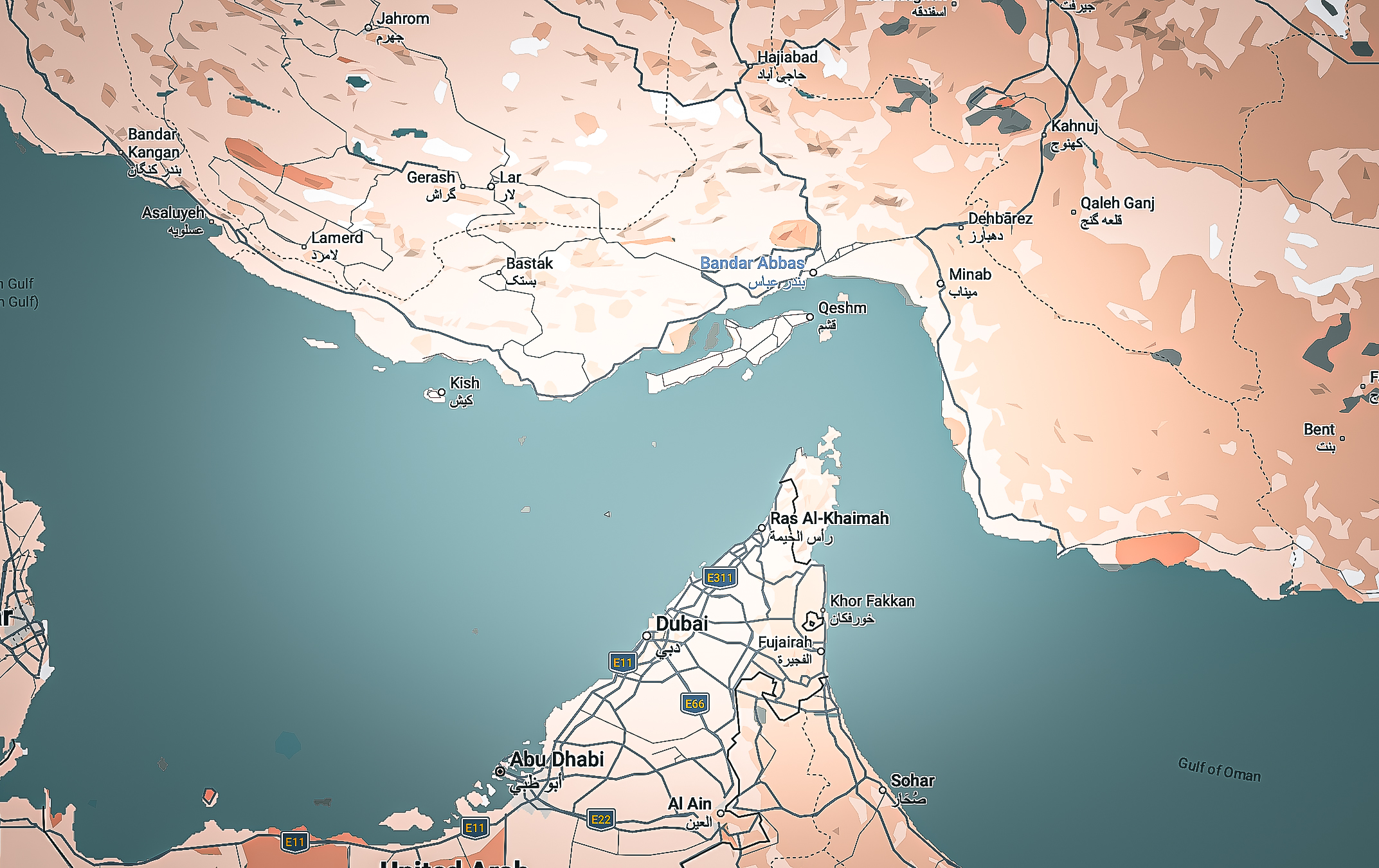
Tehran is demanding recognition of its sovereignty over the Strait of Hormuz, effectively granting Iran authority to manage one of the world’s most strategically important waterways. Reports and statements circulating in Iranian media suggest this could include imposing fees, levies, or broader controls over passage through the strait.
In reality, this demand is highly unlikely to be accepted by either neighbouring states or the wider international community.
The Strait of Hormuz is not simply a regional shipping route. Roughly one-fifth of global oil supply passes through it, making it one of the most important economic chokepoints in the world.
The economies of Saudi Arabia, the UAE, Kuwait, Qatar, and Iraq remain heavily dependent on uninterrupted access through this corridor. Their energy exports, government revenues, economic stability, and long-term development strategies all rely on free navigation through these waters.
Allowing Iran unilateral control over the strait would fundamentally alter the regional balance of power. Gulf states would effectively become economically vulnerable to Tehran’s political decisions, whether through pricing, restrictions, pressure, or threats of disruption during future disputes.
For neighbouring countries, this would not simply be viewed as a maritime issue, but as a direct threat to their economic survival and national security.
Beyond the region, the implications are even larger.
Accepting such a demand would establish a global precedent, potentially encouraging other states to challenge existing maritime norms and seek unilateral control over strategic trade corridors.
International shipping routes have operated for decades under frameworks designed to ensure freedom of navigation and prevent individual states from dominating globally critical waterways.
If those principles begin to erode, the consequences would extend far beyond the Middle East, affecting global trade flows, shipping costs, energy markets, and broader geopolitical stability.
This is why the issue is so sensitive.
What Iran is effectively proposing is not simply a concession linked to the current conflict, but a restructuring of regional maritime power itself.
Compensation and Escalation
Iran is also demanding American compensation for war-related damages, something highly unlikely to be accepted by any U.S. administration regardless of political orientation.
Such a concession would carry major political consequences inside Washington while also raising broader regional questions about accountability.
If compensation becomes part of the framework, other states could equally argue they are entitled to compensation from Iran for economic and civilian damage linked to missile strikes, drone attacks, proxy activity, and regional escalation over recent years.
This includes attacks on:
* energy infrastructure
* shipping routes
* commercial facilities
* civilian areas across multiple countries
The issue therefore becomes far larger than a bilateral dispute between Tehran and Washington.
Taken together, these demands do not appear to reflect a regime moving seriously toward compromise or rapid de-escalation. Instead, they increasingly resemble either a strategy aimed at prolonging the current stalemate or an attempt to widen the conflict politically and economically in the hope of shifting international pressure onto the United States and its allies.
The Gulf States and the Risks Ahead
Recent reports circulating across multiple media outlets claiming that the UAE and Saudi Arabia joined American air strikes against Iran raise two possible scenarios.
Either these countries were directly involved despite the absence of official confirmation, or the reports themselves form part of broader political pressure aimed at drawing regional states deeper into the conflict.
In conflicts, information itself becomes part of the battlefield. Public narratives, selective leaks, and media reporting can all serve strategic purposes, particularly when governments seek to pressure allies into taking clearer positions.
At the same time, concerns surrounding Iranian-linked networks inside neighbouring countries are not new. Regional security agencies have repeatedly referred to the existence of Iranian-linked cells and operatives operating across the Gulf and wider Middle East.
This creates a dangerous situation for Gulf states.
On one side, their economies depend heavily on stability. On the other, prolonged confrontation with Iran increases the risks of attacks on infrastructure, energy disruption, internal security pressure, and wider economic instability.
Despite these risks, Tehran still appears unwilling to retreat from its core demands. However, this strategy could ultimately backfire severely.
The longer the confrontation continues, the greater the pressure becomes on the Iranian system itself:
economically, politically, socially, and militarily.
International isolation deepens.
Sanctions intensify.
Economic strain increases.
Regional opposition hardens.
This is why the conflict increasingly resembles not a short-term crisis, but a prolonged process of attrition.
Why the Conflict May Continue
Contrary to the view held by many analysts who believe Washington seeks a rapid resolution, another interpretation is increasingly difficult to ignore:
prolonged instability may actually serve important American economic and strategic interests.
The longer tensions continue:
* the greater the shift toward U.S. energy exports
* the stronger demand becomes for American defence systems
* the deeper regional dependence on U.S. security structures grows
* the more geopolitical leverage Washington gains over energy flows and alliances
Meanwhile, many economies reliant on Middle Eastern energy continue facing inflationary pressure and economic uncertainty, while the U.S. economy remains comparatively more resilient.
Under these conditions, the incentives for rapid resolution become far less clear.
This is why the conflict may continue much longer than many expect.
And while all sides face costs, the Gulf states are likely to remain among the most exposed. Their economic models depend fundamentally on stability, investor confidence, uninterrupted trade, and secure energy exports.
Prolonged instability directly threatens the foundations upon which those economies were built.