
The latest escalation involving the United States, Israel, and Iran has once again placed the Middle East at the centre of global geopolitical tension. This comes after a very short time of the continuous bombardment of Gaza and the South of Lebanon. While much of the focus remains on military developments and political rhetoric, a more fundamental question sits beneath the surface: who ultimately bears the cost of these conflicts, and how sustainable is this model over time?
Historically, regional conflicts have rarely been contained within their immediate battlegrounds. Instead, their economic and political consequences tend to spill across neighbouring states, particularly the Gulf Cooperation Council (GCC) countries. These economies, heavily reliant on stability, energy markets, and long-term investment flows, are especially sensitive to prolonged uncertainty.
The United Arab Emirates, and Dubai in particular, has been central to this model. Over the years, Dubai has positioned itself as a global hub for capital, tourism, and talent, attracting individuals and businesses from around the world. Its appeal has been driven by a combination of relative safety, high living standards, and a tax environment perceived as more favourable than many Western economies.
In recent years, particularly following the COVID-19 period, rising taxation and increased regulation in parts of Europe and the United Kingdom have led many individuals and businesses to reassess their position. For many, this has meant exploring alternative locations that offer greater financial flexibility and perceived stability. Dubai has been one of the primary beneficiaries of this shift.
However, the reality is more complex. While the tax environment remains attractive, the cost of living and operating, particularly for businesses, has increased, and various fees and administrative costs can offset some of the perceived advantages. For individuals seeking employment, the model may still be appealing, but for entrepreneurs and small businesses, barriers to entry can be significant. Even with these considerations, many continue to look for opportunities elsewhere, influenced by economic policy decisions and growing dissatisfaction with conditions in parts of Europe and the United Kingdom.
Prior to the current escalation, GCC countries had been actively positioning themselves as destinations for capital and talent, attracting those seeking stability and opportunity. This strategy had seen considerable success. However, the emergence of renewed regional tensions raises important questions about how sustainable this model remains under prolonged geopolitical pressure.
In times of escalation, the financial burden of conflict often shifts toward these states, whether through increased defence spending, deeper security cooperation, or indirect economic concessions. This is not a new dynamic, but it intensifies significantly during periods of sustained tension.
In recent weeks, even before the ceasefire announcement, GCC countries were already spending billions to defend themselves against ongoing threats, often using high-cost defence systems against significantly cheaper alternatives such as drones. This imbalance alone highlights how quickly costs can escalate.
The result is predictable. Large defence contracts are signed, military spending rises sharply, and pressure builds on government budgets. This inevitably comes at the expense of long-term development plans and investment projects, forcing difficult trade-offs.
In reality, the idea of a “tax-free” model across the GCC is already beginning to shift. The United Arab Emirates has introduced corporate tax in recent years. Oman has moved toward a personal income tax for higher earners. Qatar has implemented corporate taxation on foreign-owned businesses long before them. These are early signals of a broader transition.
Sustained geopolitical tension will only accelerate this trend. As populations grow, expenditure increases, and security costs rise, the pressure to generate additional revenue will intensify. The model that once relied on low taxation and high external income is gradually being reshaped, and prolonged instability in the region will only hasten that shift.
At the same time, the existence of ongoing geopolitical rivalry in the region continues to shape economic decisions. For the GCC countries, stability is not just a political objective; it is the foundation of their economic model. Long-term development plans, diversification strategies, and foreign investment all depend on a relatively predictable environment. Any sustained disruption places pressure on these ambitions.
The situation also raises broader questions about the structure of regional security itself. To what extent are external powers willing to sustain prolonged tension, and how does this shape economic relationships within the region? Defence partnerships, arms agreements, and security guarantees come with significant financial implications, often influencing national priorities over time.
This dynamic has, at times, been expressed openly. Statements from U.S. leadership, particularly during the Trump administration, emphasised the scale of financial commitments and investments secured from Gulf states. High-profile visits were followed by announcements of large investment figures, running into the trillions over time, presented as strategic partnerships, viewed by many as a weakness in those governments.
Beyond the headlines, these moments highlight an underlying reality: financial commitments can be closely tied to security relationships. Whether framed as investment, cooperation, or alignment, the expectation of economic contribution remains a central part of the equation.
In the context of ongoing conflict, this dynamic becomes even more pronounced. Rising security threats lead to increased defence spending, new agreements, and further financial commitments. The result is a cycle in which instability drives expenditure, and expenditure reinforces existing dependencies.
This raises more difficult questions. To what extent is this dynamic allowed to continue, and who ultimately benefits from its persistence? Given the clear imbalance in military capability, the question of duration becomes particularly relevant. If escalation can be contained or concluded more rapidly, why does the conflict instead appear to stretch over time?
One possible explanation lies in the economic dimension of prolonged instability. Continued tension sustains demand for defence systems, security cooperation, and long-term agreements. Whether deliberate or not, the financial incentives tied to ongoing conflict are significant, particularly for industries and actors positioned to benefit from increased spending.
These are not simple questions, nor do they have straightforward answers. But as the conflict continues, it becomes increasingly difficult to ignore the broader incentives that may exist alongside the stated strategic objectives.
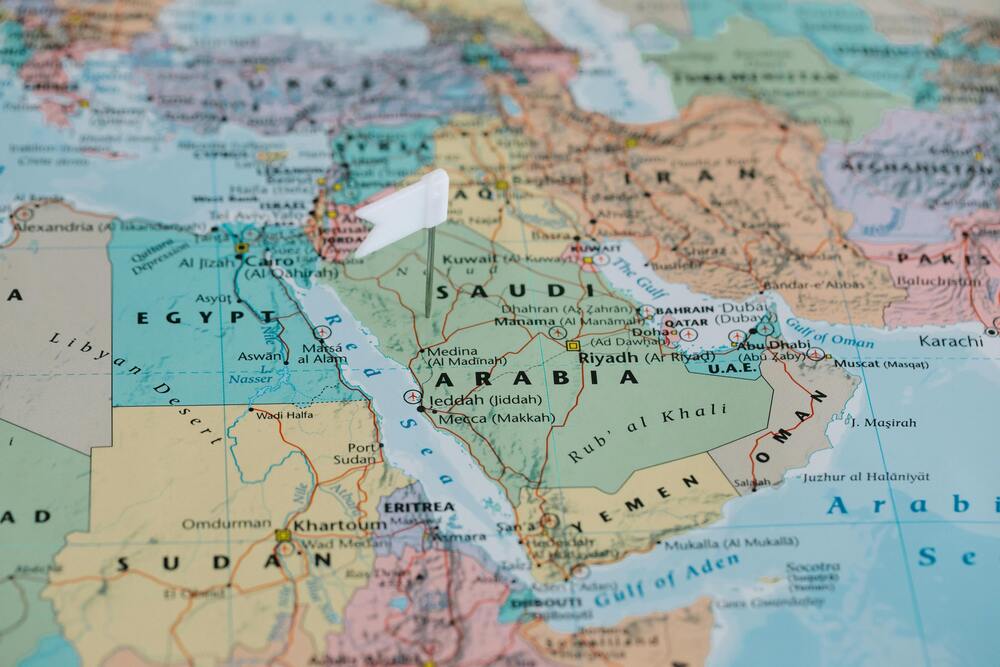
Energy markets play a central role in this dynamic. Disruptions to key routes such as the Strait of Hormuz have immediate global consequences, affecting prices, supply chains, and economic confidence. Around 20% of global oil supply passes through this corridor, making it one of the most critical chokepoints in the global economy.
In recent developments, tensions around the strait have escalated significantly. Iran restricting access, targeting vessels, and the blockades have all contributed to heightened uncertainty. At the same time, responses from the United States have appeared inconsistent, at times distancing itself from direct responsibility, while also calling for the route to remain open and secure.
These mixed signals raise further questions. If the stability of such a critical route is essential to global markets, why does the situation appear to move in cycles of escalation rather than resolution? And if alternative supply options are presented, such as increased reliance on U.S. energy exports, as very clearly stated by this US administration, what role does this play in shaping the broader strategy?
The implications are significant. Prolonged disruption supports higher prices, shifts trade flows, and creates new dependencies. For some actors, this environment may present economic advantages, even as it introduces risk for others.
This leads back to a more fundamental question: what is the ultimate objective of sustaining such a volatile environment, and who stands to benefit from its continuation?
There is a historical pattern here that cannot be ignored. Previous conflicts in the region have not only destroyed countries, they have reshaped entire economies and power structures. Iraq is the clearest example. The 2003 invasion did not just result in physical destruction; it created long-term institutional weakness, economic dependency, and political fragmentation that persist to this day.
Gulf states were not passive observers in that process. As openly acknowledged by senior officials, including former leadership in Qatar, GCC countries contributed significantly to the financial cost of the invasion, driven by the perception of Iraq as a threat. Kuwait, in particular, played a direct role in supporting that outcome.
The aftermath also brought clear economic advantages to parts of the region. The collapse of Iraq opened the door to re-export markets, capital flows, and investment opportunities that were not accessible before 2003. At the same time, the continuation of a weak Iraqi state has, in many ways, served regional economic interests. Support, whether direct or indirect, has helped maintain a system that remains dependent, fragmented, and unable to fully recover.
This raises an uncomfortable but necessary question: if similar conditions emerge elsewhere, would the same approach be repeated?
The current conflict places GCC countries in a difficult but decisive position. Ongoing attacks on infrastructure and economic assets directly threaten the stability on which their entire model depends. In such an environment, neutrality becomes increasingly difficult to maintain.
The reality is that prolonged instability forces action. Billions will be spent, whether on defence, security, or broader strategic objectives. The pressure to contain and eliminate perceived threats will only grow, and financial involvement is likely to follow.
This conflict has exposed a fundamental truth: these economic models are highly dependent on regional stability. Without it, they cannot function as intended.
The priority for GCC governments is therefore clear, restore stability as quickly as possible. What remains less clear, however, is whether all actors involved share that same objective, or whether prolonged instability continues to serve other interests.
Looking ahead, the key question is not simply how the current tensions will unfold, but how long such an environment can be sustained. Prolonged instability carries cumulative costs, economic, political, and social, that extend far beyond the immediate actors involved. For the GCC countries, balancing security concerns with economic priorities will remain a central challenge.
At the same time, external actors must consider the long-term implications of a continuously volatile region. While short-term strategic or economic gains may exist, an extended period of disruption risks creating deeper structural issues that are more difficult to manage over time.
Ultimately, the trajectory of the region will depend on a complex interaction of political decisions, economic interests, and security considerations. What remains clear is that the cost of conflict is rarely confined to those directly engaged in it. Instead, it is distributed across the region, often in ways that are not immediately visible, but deeply consequential.
It is becoming increasingly clear that GCC countries will be drawn into bearing a significant share of the financial burden of this conflict, as has been the case in previous regional crises. The scale and nature of recent attacks on infrastructure and economic assets have exposed a level of vulnerability that cannot be ignored.
Confidence in these economic models has been shaken. Once that trust is weakened, restoring it is neither quick nor easy, it can take years. For economies built on stability, investment, and long-term planning, this presents a serious risk.
As a result, the priority must be a swift resolution for them, regardless of the financial cost. The longer the conflict continues, the greater the damage, not only physically, but also economically and structurally.
Even if the Iranian government changes course, trust between these countries is broken and unlikely to be repaired.
The reality is simple: stability is not optional for these economies. Without it, the model begins to break down. Whether that outcome aligns with the interests of the United States and Israel is an entirely different question.