
Unemployment in Iraq is not simply a statistic; it is a structural problem that continues to build year after year. The number of unemployed is steadily increasing, while the state has already stretched itself to its limits as the primary employer. With millions on government payrolls, this model is becoming increasingly difficult to sustain. Especially as the political class appears intent on continuing its corruption and extracting as much as possible before meaningful change occurs.
Official figures are highly questionable in Iraq; however, reports from early 2025 from the Ministry of Planning suggest that unemployment is approximately 13-13.4%. According to them, this was down from the previous years. But as with everything else in Iraq, these figures cannot be confirmed. Other official sources claim it’s closer to 16%. Unofficial sources or the real-world estimates vary from 16-20%, which is more likely the case. Walking through the streets of Baghdad and other cities, it becomes clear that many young graduates are forced to rely on daily, labour-intensive work simply to survive.
Youth unemployment is estimated at around 32%, a figure that should raise serious concern. Yet there appears to be limited meaningful action from official institutions to address this growing challenge. In some cases, recent policy direction suggests the opposite.
Addressing this issue requires a shift in approach. Encouraging entrepreneurship, strengthening law and order, and providing a stable environment for private sector activity are essential. This must be accompanied by clear legal protections for both employers and employees, which will help build confidence and enable sustainable job creation.
However, the opposite appears to be true. The limited private sector that exists is largely controlled by political elites and powerful groups that have held disproportionate influence over the country since 2003, armed militias.
At the same time, the private sector remains weak and constrained. Years of policy failure, combined with the influence of powerful groups shaping the economic environment to serve their own interests, have left little room for genuine private sector growth. Instead of acting as a driver of opportunity, the market has been reduced to a limited space with few prospects for large-scale employment.
Much of the existing economic activity has been concentrated among entities linked to political actors, armed groups, and foreign firms, which have often received preferential treatment since 2003. As a result, the broader private sector has been left unprotected and largely overlooked as a viable pathway for investors, entrepreneurs, and new graduates. It is widely perceived as an unsafe option, both due to constant uncertainty and the absence of reliable legal protections for employers and employees alike.
The pressure is further intensified by the growing number of graduates entering the workforce each year. The expansion of privately owned universities has significantly increased output, but without a corresponding increase in job creation. This has created a widening gap between expectations and reality, where education no longer guarantees opportunity.
Around 250,000 graduates enter the labour market each year, adding to an already large pool of job seekers, while only a limited number of jobs are created within the economy. This imbalance has led to a growing backlog, increasing frustration, and rising social pressure, placing even greater strain on the public sector.
At the same time, corruption further distorts access to employment. Reports of families attempting to secure as much as $10,000 in order to obtain a job are not uncommon. In many cases, access to employment is perceived to depend not on merit, but on the ability to pay. This reflects a broader system in which corruption operates at multiple levels, from senior political figures to local administrative processes, reinforcing inequality and undermining trust in institutions.
For many, migration was once seen as an alternative. However, that option is becoming increasingly uncertain. Europe is no longer as accessible as it once was, with rising political pressure, stricter immigration policies, and growing anti-immigration sentiment across several countries. The external pressure valve is gradually closing, leaving younger generations with fewer avenues for escape. As opportunities abroad diminish, the pressure for meaningful change within the country is likely to intensify.
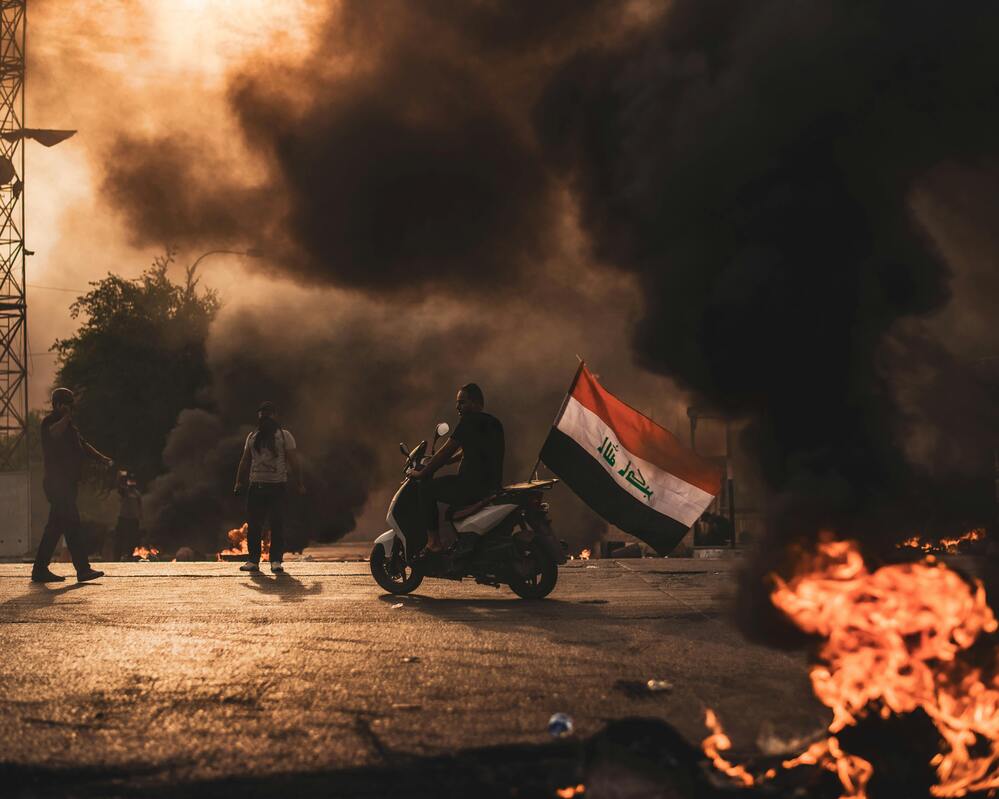
Domestically, the situation has already shown signs of strain. In previous years, large-scale protests emerged, with citizens demanding jobs, reform, and accountability. The response was to unleash terror upon the protesters; they were met with force, many were killed, and the others were silenced. Smaller demonstrations continue to occur, but they are quickly contained. The underlying issues, however, remain unresolved.
This creates a dangerous dynamic. A growing population, limited opportunities, and rising frustration form the conditions for instability. It is not a question of if pressure exists, but how long it can be contained.
Iraq cannot continue to rely solely on oil revenues and public sector employment to sustain its economy. This model may delay the problem, but it cannot resolve it. Without meaningful structural reform, the gap between workforce growth and job creation will continue to widen.
Any meaningful change, however, requires functioning and accountable governance. The current trajectory raises serious questions about whether existing institutions are capable of delivering long-term stability or economic development. Periodic public reactions over recent years suggest that underlying pressures remain and will intensify in the coming years.
At the same time, there is a growing belief that the political leadership is increasingly disconnected from the needs of the population, with priorities that do not align with long-term national development. This disconnect risks deepening public frustration, particularly as economic conditions continue to deteriorate. Much of the system appears to remain intact due to external support, whether from the United States or regional actors. But that support is not guaranteed indefinitely. The moment will come when conditions shift, and when they do, those in power will either leave or be forced to answer for the consequences of their actions.
Without a shift in direction, the burden of these challenges will fall increasingly on the wider population, while those in positions of power remain insulated. They have secured their futures through accumulated wealth, at the expense of the state, and in many cases, have the option to leave, avoiding the consequences that others will be left to face.
At some point, the pressure will reach a level where it can no longer be managed. When that happens, the consequences are unlikely to be gradual.
They will be sudden.