
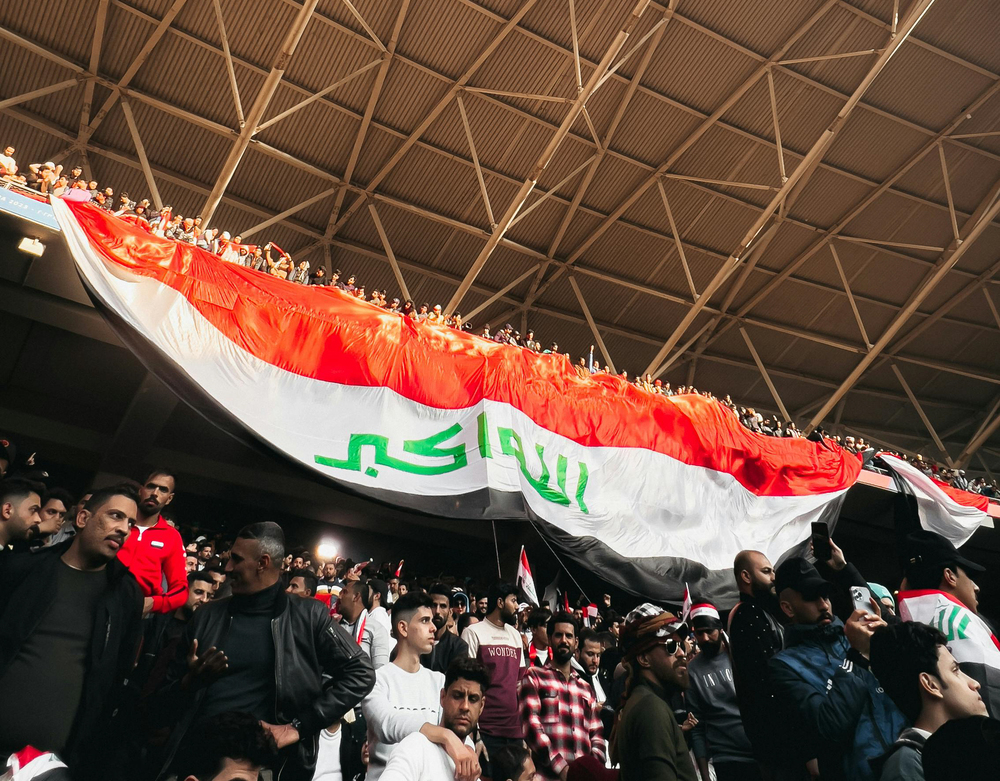

I remember a question I was asked many years ago, one that never left me and, over time, pushed me to think more deeply about Iraq’s identity and how it connects to the reality we see today.
“Where are you originally from?”
It seemed like a simple question. But the context behind it was not. The person asking had roots in the east of Iraq, with Persian origins. The friend we were discussing identified as Arab. I have Turkish origins.
That moment stayed with me, not because of the question itself, but because of what it revealed.
Iraq’s challenges are often described in political, economic, or security terms. But beneath all of these lies a deeper issue: an unresolved and increasingly visible identity crisis.
This is not unique to Iraq alone. Across much of the Arab world, the current structure of states, borders, regimes, and political alignments was shaped by external decisions, particularly after the Sykes–Picot Agreement. These arrangements did not necessarily reflect the realities on the ground, and in many cases, they continue to be contested.
In Iraq’s case, the issue runs deeper.
This is not simply a question of culture, ethnicity, or religion. It is the result of centuries of conflict over a land that has rarely existed as a stable, unified entity. When the state weakens or collapses, these underlying divisions resurface immediately.
Iraq today operates without a unifying national identity strong enough to override competing loyalties. Instead, identity has become fragmented, politicised, and, in many cases, weaponised.
Loyalty shifts toward ethnicity, religion, sect, tribe, or network, particularly after the collapse of the state in 2003, when central authority disappeared, and alternative structures filled the vacuum.
Understanding this is essential to understanding why the country continues to struggle with instability, weak governance, and repeated cycles of conflict.
A Geography Shaped by Power
Iraq’s modern identity cannot be separated from its geography and history.
For centuries, the region that is now Iraq has existed at the intersection of empires, Ottoman, Persian, and earlier powers. It was not formed organically as a unified national entity, but shaped through external rule, shifting borders, wars, and competing centres of influence.
Different regions developed distinct political, cultural, and economic ties. These differences did not disappear with the creation of the modern Iraqi state.
Geography made influence easier.
Regions closer to external powers were more exposed to their reach. This pattern has become increasingly visible in the post-2003 period.
The south of Iraq has seen deep and sustained influence from Iran. The north has experienced growing involvement from Turkey. In the West, connections to Arab states have existed, although these areas have also experienced prolonged instability and neglect.
In more recent years, certain political figures claiming to represent the Sunni Arab population have received support from Gulf states. This support, however, is not neutral. It is often tied to influence, alignment, and the ability to shape outcomes through selected actors.
For regional powers, Iraq is not just a neighbour, it is an opportunity.
The weakening of the Iraqi state has allowed external actors to extend their reach economically and politically. Influence is not limited to politics; it includes investment, control over trade flows, extraction of resources, and access to a large consumer market created by a weakened domestic economy.
The fragmentation of Iraq has produced a system that benefits external actors.
What changed over time was not the existence of multiple identities, but how they were managed.
Rather than being unified under a central framework, these identities became part of a fragmented system where divisions persist and are reinforced. Power shifted away from a strong central authority in Baghdad toward multiple external and internal centres of influence.
The result is a population caught between competing forces, with no single structure strong enough to unify them.
When was Iraq Unified
The only period in recent history where a strong, unified Iraqi identity appeared to exist was under the Ba’ath regime of Saddam Hussein.
This is a contested view, and many will reject it, often based on political, sectarian, or historical perspectives. But it is a point that requires examination rather than dismissal.
The modern Iraqi state itself was not formed organically. Following the Sykes–Picot Agreement, Iraq was established under the Hashemite monarchy, with leadership brought from the Hijaz rather than emerging from within Iraqi society.
Even during this early period of state-building, signs of fragmented allegiance were present. In cities such as Najaf, there were moments where participation in state structures, including elections, was resisted, highlighting an early disconnect between central authority and segments of the population.
This was followed by a period of instability and political change, including the revolution led by Abdul Karim Qasim. These shifts reflected competing visions of Iraq’s identity: nationalist, socialist, and religious.
The emergence of the Ba’ath Party marked a significant turning point.
Often labelled as a Sunni movement, the reality was more complex. It was an Arab nationalist movement with a cross-sectarian membership base, including a large number of Shiite members in Iraq. Its core objective was not sectarian; it was ideological.
During this period, the state enforced a centralised national identity. Expressions of sectarian, ethnic, or political divergence were tightly controlled.
Loyalty was directed toward the state.
Iraq appeared unified.
This was particularly visible during the Iran–Iraq War, where a strong sense of national alignment emerged across much of the population. For the majority of people, allegiance was to Iraq rather than to external actors or sectarian identity.
However, this unity was not without pressure.
Attempts were made by external actors, particularly Iran, to influence internal dynamics, including through political and religious networks. Some groups and movements operated within this space, contributing to internal tension.
But the system held.
At least on the surface.
Because beneath this apparent unity, the underlying divisions remained.
They had not been resolved; they had been contained.
And once the system weakened, those divisions would re-emerge rapidly.
2003: The Collapse of a Controlled System
The 2003 invasion did not create Iraq’s identity divisions. It removed the structure that had been containing them.
But the process had already begun earlier.
The decade of sanctions that preceded the invasion played a significant role in weakening Iraqi society. Economic collapse, poverty, and isolation reshaped social behaviour. As state capacity declined, people increasingly relied on alternative structures, tribes, religious networks, and informal systems of support.
These shifts were not always visible, but they were taking place beneath the surface.
By the time the invasion occurred, the foundations for fragmentation were already in place.
With the collapse of the state, these suppressed identities resurfaced rapidly. What had been pushed into the background became visible, organised, and politically active.
In an environment defined by insecurity and economic hardship, individuals turned toward the closest and most reliable structures available: tribal leadership, religious authority, and emerging political networks.
Sectarian, ethnic, and regional affiliations became the primary basis for mobilisation.
At the same time, a new political system emerged.
Rather than attempting to rebuild a unified national framework, it organised power along these same lines of division. Key decisions, ranging from institutional restructuring to security arrangements, reinforced fragmentation rather than reducing it.
Identity was no longer just a social reality.
It became a political instrument.
And in almost every case, it was used to divide communities, reshape local power structures, and redefine how authority operated at every level, from neighbourhoods to the state itself.
Identity as Political Currency
In the post-2003 system, identity has become a central mechanism of power.
It shapes access, who you know, your background, your connections, determining employment, protection, and opportunity. In many cases, it even influences how individuals navigate legal or informal disputes.
Central authority has weakened, and allegiance to the state has diminished.
Political representation, resource allocation, and institutional control are often organised along sectarian and ethnic lines. Within most institutions, networks tied to specific identities influence hiring, promotion, and access, gradually reshaping structures from within.
This has had visible social consequences.
In some cases, individuals adapt their public identity to fit the environment they operate in, modifying names, affiliations, or outward expressions of belief in order to secure safety, employment, or opportunity. This is now about survival.
The result raises a fundamental question: where does allegiance lie, within the state, or within the structures that have replaced it?
Rather than building a shared national identity, the system distributes power across groups. Multiple centres of influence emerge, each protecting its position, each dependent on the continuation of the current structure.
This creates strong incentives to maintain division.
The system relies on and reproduces fragmentation. As more individuals are drawn into these networks, the system becomes more entrenched and more difficult to challenge.
In many cases, alternative forms of organisation have re-emerged. Informal protection networks, often linked to tribal or local affiliations, provide services and support that the state no longer reliably delivers.
This reflects a deeper reality.
When the state weakens, other structures fill the gap.
Political actors benefit from reinforcing identity boundaries. Loyalty shifts toward group affiliation, networks, and protection systems.
In this environment, national identity disappears.
What remains dominant is affiliation, who you are, where you belong, and which network you are part of. The sense of nationalism fades. Survival comes first: income, employment, opportunity. When the state fails to provide these, it loses its place in people’s lives.
External Influence and Competing Alignments
Iraq’s internal fragmentation is further complicated by external influence.
Regional powers, particularly Iran, Turkey, and various Arab states, engage with Iraq not as a unified state, but through its internal divisions.
A fragmented Iraq serves multiple strategic interests.
A weakened state is less capable of projecting power or challenging neighbouring countries. At the same time, it becomes an open market, dependent on imports, external services, and foreign investment. Domestic industries remain underdeveloped, increasing reliance on external economies.
These dynamics create a system of exchange.
Support flows inward, political backing, financial assistance, and influence directed toward selected actors. In return, economic benefits flow outward through trade, contracts, and access to Iraqi markets, leaving the local population to suffer.
Different external actors align with different internal groups, reinforcing existing fractures rather than reducing them.
Over time, this creates a system where internal divisions are not only sustained but become functional within a broader regional framework.
Loyalty becomes layered:
* local
* sectarian
* political
* external
National identity becomes secondary.
Society Without a Common Frame
The consequences of this fragmentation extend far beyond politics.
In everyday life, identity shapes opportunity, security, mobility, and access to resources. In some cases, individuals have altered names or identification details to navigate risk, particularly during periods of heightened violence. Even in more recent years, alignment with certain groups can influence access to safety, employment, and opportunity.
These are not abstract dynamics.
They affect where people go, how they present themselves, and which networks they choose to associate with.
Trust in national institutions declines when those institutions are seen as representing specific groups rather than the population as a whole.
This perception has been reinforced by the political system itself. Ministries and public institutions are often associated with particular factions, where influence over positions and resources becomes a matter of negotiation and control rather than public service.
As a result, public trust in institutions disappears.
This erosion of trust has direct consequences for social cohesion.
Over time, individuals adapt to the system as it exists. They align with networks, rely on connections, and prioritise group identity over national identity, out of necessity.
It becomes a system people must navigate in order to function.
A System That Reinforces Division
The identity crisis in Iraq is not simply a social issue.
It is reinforced by the system itself. The same structures that enable militias, sustain corruption, and distribute economic power also weaken state institutions, leaving many of them existing more in form than in function.
A unified national identity would pose a direct challenge to this system. It would reduce the importance of the divisions that many political actors depend on to maintain influence and control.
For this reason, the current structure has little incentive to move toward unity.
The crisis persists not because it is misunderstood, but because it is embedded.
Rather than being resolved, these divisions are continuously reproduced and reinforced by those who benefit from them.
Why It Matters
A country without a shared sense of identity struggles to build a functioning state that serves its population.
The development of stable institutions, consistent policy, and long-term planning across education, healthcare, and economic sectors becomes extremely difficult within such a fragmented system.
Without a unifying framework, governance turns into negotiation between competing groups rather than coordination toward common goals.
The result is a state that struggles to deliver:
* economic growth
* security
* social stability
This reality has begun to shape how younger generations view Iraq’s past and present.
In recent years, more people have started questioning earlier periods of governance, including the Ba’ath era under Saddam Hussein. For some, this reflects not necessarily endorsement, but a search for something that appears absent today, a sense of unity, direction, and national identity.
Many did not experience that period directly. Others did and have formed their own conclusions over time. What is consistent, however, is the growing awareness that the current system does not provide a coherent national framework.
Meaningful reform requires more than policy change.
It requires a unifying sense of identity and direction, a foundation that allows individuals to see themselves as part of a shared national project rather than competing groups.
Without that, reform remains limited. This is why this current system will never be able to succeed in true reform. They survive on division.
Conclusion
Iraq does not lack identity.
It has multiple identities, each shaped by history, politics, and circumstance, rooted in a civilisation that stretches back thousands of years.
The challenge today is that no single framework exists to unify them.
The current political system survives through division. Unity would threaten its foundations.
The period of enforced unity under past regimes masked this reality but did not resolve it. The post-2003 system exposed these divisions and, in many ways, reinforced them, ensuring the continuation of a fragmented and weakened state.
Today, identity in Iraq is fragmented, politicised, and embedded within structures of power.
There are, however, signs of change.
As the system continues to fail, more people are beginning to question it. Patterns that once appeared chaotic, violent, unstable, and targeted divisions are increasingly being viewed through a different lens. Awareness is growing that many of these dynamics were not random but part of a broader system that benefits from division and disorder.
This shift in perception is significant.
It suggests that, over time, the foundations of this system may begin to weaken, not from within its structures, but from a loss of legitimacy among the population.
But awareness alone is not enough.
Iraq requires fundamental change.
Without a restructuring of the system that has shaped the past two decades, any attempt to rebuild the country or to establish a coherent national identity will fail. The whole system needs to collapse.